Contents +
Everything to arrange for a Malé City trip: the visa, the SIM card, cash, transport fares and the local rules. Every fare and rule below was checked in July 2026.
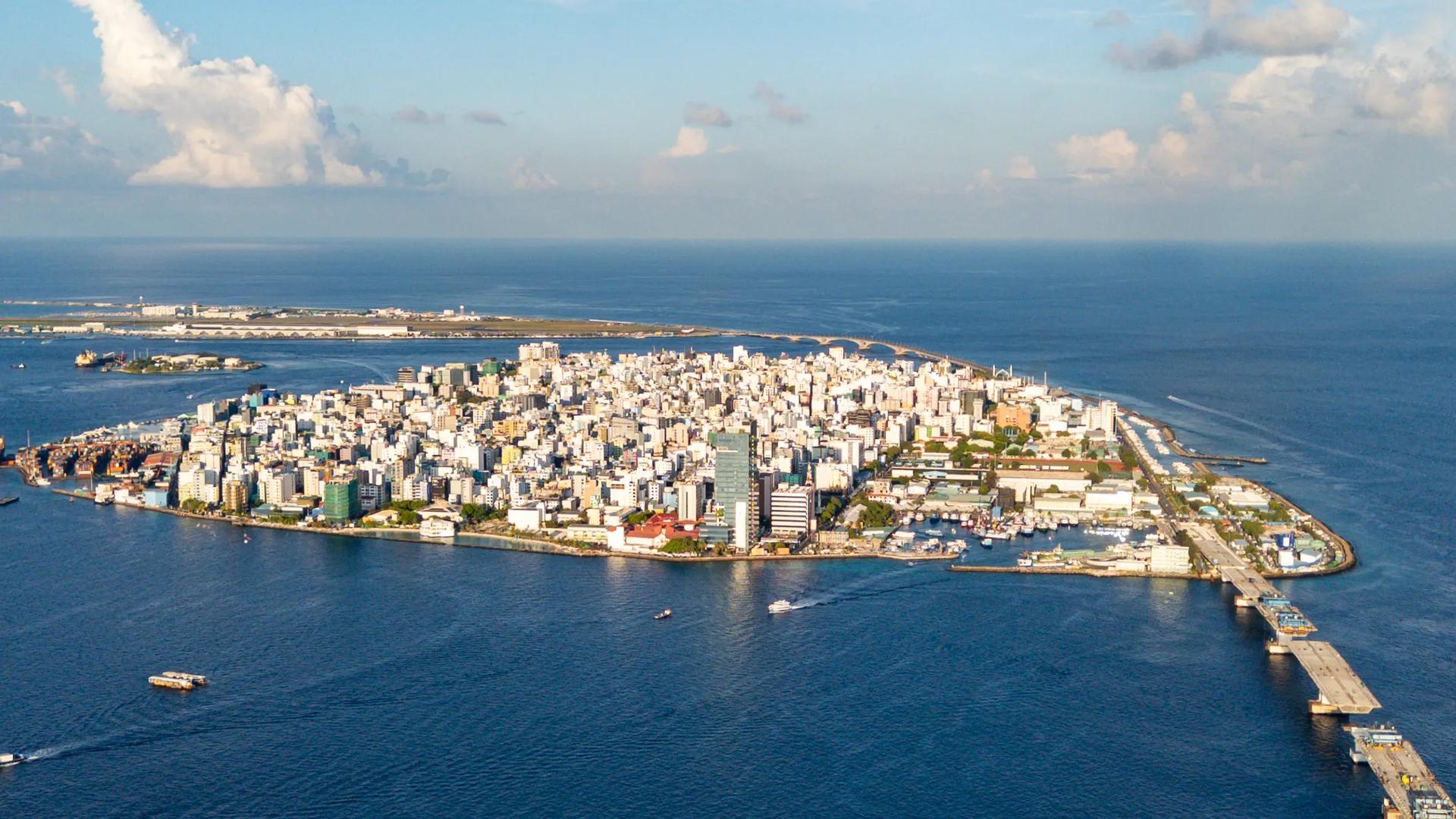
Everything here applies to Malé City, the capital, where Maldivians live and work. Malé is not the destination the Maldives is mainly known for; that is the resorts, and resorts run by their own rules with alcohol, resort dress codes and transfers handled for you. This guide is for travellers who specifically want to visit the city.
Before you land: visa and IMUGA
You do not need to apply for a visa. Every nationality gets a free 30-day tourist visa on arrival.
You do need to fill in one form: the IMUGA traveller declaration. It is free, it is filled in online at imuga.immigration.gov.mv, and it must be submitted within 96 hours before you arrive. Websites that charge money for it are resellers; use the official portal.
Get a SIM card before anything else
Most Maldivian apps, taxis and food delivery included, send their verification codes by SMS, and they work best with a local +960 number. That is why the SIM comes first.
- Where: Dhiraagu and Ooredoo counters in the airport arrivals area.
- Cost: tourist bundles from roughly USD 40 at the time of writing.
- eSIM: available if your phone supports it.
- Short layover: skip the SIM and use offline maps.
Try your own number in the apps first; some accept foreign numbers for the code. Once you are connected, our guide to the apps worth installing covers what to put on your phone.
Money: cards or cash?
The currency is the Maldivian rufiyaa (MVR). US dollars are widely accepted, but your change comes back in rufiyaa.
Cards work at:
- Hotels and guesthouses
- Most sit-down restaurants
- Supermarkets and bigger shops
Cash only, or mostly cash:
- The airport ferry (MVR 15)
- Taxis, even when booked through an app
- Market stalls and small tea shops
- Public ferries (a few rufiyaa in coins and small notes)
A simple approach: carry a small amount of MVR in small notes for transport, tea and markets, and pay everything else by card.
Worth knowing about prices: general goods already include 8 percent GST, so the shelf price is what you pay at the till.
From the airport into the city
- Ferry: MVR 15 in cash (MVR 20 before 6 AM), every 15 minutes or so from about 5 AM to midnight, about ten minutes to Malé. It keeps running through Friday prayers.
- Taxi: flat MVR 70 to Malé over the Sinamalé Bridge; MVR 80 to Hulhumalé Phase 1; MVR 85 to Phase 2; MVR 10 more from the domestic terminal. Vans with 7 to 10 seats cost more, about MVR 110 to Malé.
- Bus: about MVR 10 to Malé on an hourly route, and MVR 15 to Hulhumalé Phase 2 on a 24-hour route.
Getting around Greater Malé
Taxi fares are set by the government. There is no meter and no haggling. Book through the taxi apps or hail one on the street.
- Within Malé, or within one Hulhumalé phase: MVR 30
- Between Hulhumalé Phase 1 and Phase 2: MVR 40
- Malé to Hulhumalé Phase 1: MVR 85
- Malé to Hulhumalé Phase 2: MVR 100
- A small per-bag charge can apply if you have a lot of luggage
Malé's own minibuses run three routes at a flat MVR 7. The island is about six square kilometres, so walking covers most of it. For a walking route through the historic core, take our two hour rush tour.
Friday and prayer times
The weekend is Friday and Saturday, not Saturday and Sunday.
- On Friday: most restaurants stay closed through the morning and open after Friday prayers; a few open in the morning, and a rare few stay closed the whole day. Shops mostly close from around 11 AM to 2 PM, and public ferries to the atoll islands do not run at all.
- Every day: shops close for 15 to 20 minutes at each of the five daily prayer times. If a shop is closed, it usually reopens within half an hour.
- Around the clock: a number of shops and small marts run 24 hours, so water and snacks are never far away.
Dress and etiquette
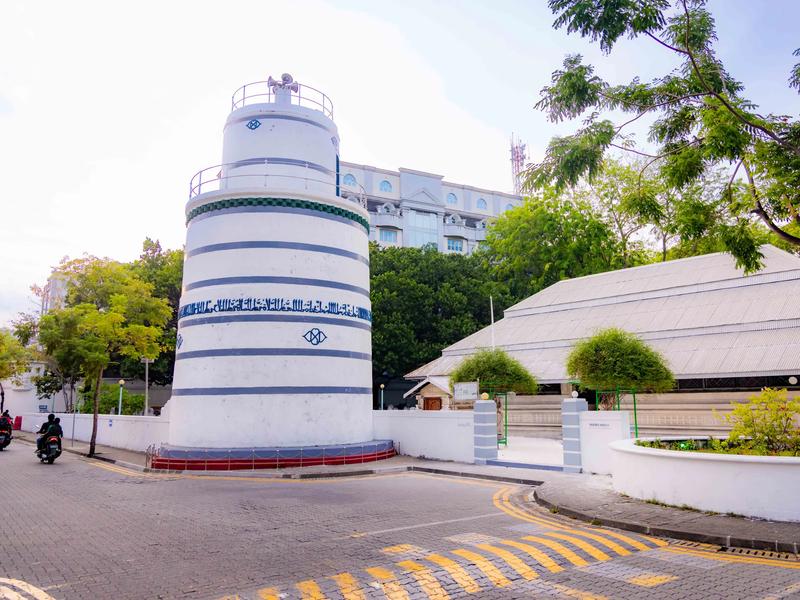
Day to day, Malé City is relaxed about dress: shorts and normal summer clothing are fine, and nothing is enforced, but keep it reasonable; anything very revealing is best avoided. Mosques are the exception: to go inside, take off your shoes and cover your shoulders and knees, which means no shorts. Tipping is not expected anywhere, though it is appreciated. Dhivehi is the official language, and English is widely spoken everywhere in the city.
Alcohol, tap water and the heat
- Alcohol: not sold anywhere in Malé City, and you cannot bring it into the country. The one licensed venue in the capital area is the Hulhule Island Hotel by the airport. Resorts serve alcohol; the city and the local islands do not.
- Tap water: do not drink it. Bottled water is cheap and sold everywhere.
- Heat: it is hot all year round. Plan your walking for the morning or late afternoon.
The airport left-luggage service charges roughly MVR 100 per standard bag per 24 hours and needs photo ID. The counter is in Terminal 2, near the restrooms and prayer rooms.
Fares, rules and hours above were checked in July 2026 and do change. When you need something specific while you are here, a pharmacy, a money exchange, a supermarket, our service directory lists them by island with phone numbers and map links.
Ready to Explore the City?
Restaurants with full menus, hotels and everything to see, across Malé, Hulhumalé and Vilimalé.
Start with Places to EatHeading to Malé? Send this to your travel group.